When comparing what looks better, glossy carbon fiber or matte carbon fiber, the answer depends on the vehicle, lighting, surrounding trim, and maintenance priorities. Glossy carbon fiber usually appears more eye-catching because its clear surface increases shine, contrast, and weave visibility. Matte carbon fiber looks more understated, technical, and uniform, making it suitable for daily-driven vehicles, dark interiors, and parts exposed to fingerprints or direct sunlight.
The visual finish does not automatically determine the structural performance of the underlying carbon fiber. Glossy and matte parts can use the same carbon fabric, resin system, fiber orientation, and molding process, while the visible difference comes mainly from the outer resin layer, clearcoat, texture, or surface treatment. Buyers should therefore evaluate appearance, cleaning requirements, glare, scratch repair, part location, and total ownership cost separately.
Glossy carbon fiber creates stronger reflections, sharper weave contrast, and a more noticeable performance-oriented appearance.
Matte carbon fiber reduces glare and fingerprints, but surface repairs may create visible texture differences.
Exterior parts generally suit gloss when visual impact matters and matte when reflections must remain controlled.
Interior trim often benefits from matte surfaces because dust, fingerprints, and small scuffs attract less attention.
Real carbon fiber, vinyl film, overlays, and cosmetic coatings differ substantially in structure, lifespan, repairability, and price.
The correct finish should match paint color, cabin materials, lighting conditions, and the vehicle’s complete design.
Different carbon fiber finishes solve different visual and practical problems. A glossy surface emphasizes the twill or plain-weave pattern by reflecting light across the clearcoat, while a matte surface scatters light and produces less visual contrast. The best choice is therefore not determined by finish alone; it also depends on whether the product is a structural component, a cosmetic overlay, a replacement panel, or a film.
For professional purchasing, evaluate five factors: appearance, surface durability, maintenance, repairability, and application fit. Ask suppliers to identify the fiber type, weave pattern, resin system, curing method, coating system, and dimensional tolerances. For visible automotive parts, request a physical sample rather than selecting only from digital photographs, because camera exposure and screen calibration can change the perceived difference between gloss and matte surfaces.
Gloss generally looks more dramatic, reflective, and visually expensive, while matte looks more restrained, contemporary, and technical. Choose glossy carbon fiber for exterior spoilers, mirror caps, hoods, dashboards, and show-oriented builds when visible weave contrast is important. Choose matte carbon fiber for steering-column covers, motorcycle panels, daily-driver interiors, and areas where glare, fingerprints, and reflections are unwanted.
The visual result also depends on the weave scale. A 3K 2×2 twill pattern with a gloss clearcoat may show strong diagonal movement, whereas the same weave under a matte coating can appear flatter and more uniform. Large panels reveal these differences more clearly than small trim pieces, so sample testing should be performed under the lighting used in the final vehicle.
| Evaluation factor | Glossy carbon fiber | Matte carbon fiber | Practical implication |
|---|---|---|---|
| Shine | High surface reflection | Low surface reflection | Gloss attracts more attention; matte reduces visual distraction |
| Weave visibility | Strong contrast and depth | Softer contrast | Gloss is better for displaying the pattern |
| Glare | More likely under direct sunlight | Lower glare | Matte is useful near windshields and instrument panels |
| Fingerprints | Frequently visible | Usually less visible | Matte requires fewer appearance-related wipe-downs |
| Dust visibility | Dust can stand out on dark reflections | Dust blends more with the texture | Neither finish eliminates cleaning |
| Fine scratches | Can appear as bright lines | May appear as dull patches or texture marks | Repair method differs by finish |
| Cleaning | Mild soap, water, and soft microfiber | Same basic method, with extra care against sheen changes | Abrasive products should be avoided |
| Repairability | Polishing may restore some gloss | Spot polishing can create uneven shine | Matte repairs often require controlled refinishing |
| Best visual context | Metallic paint, show cars, high-contrast trim | Satin paint, dark cabins, technical builds | Match the finish to the surrounding surfaces |
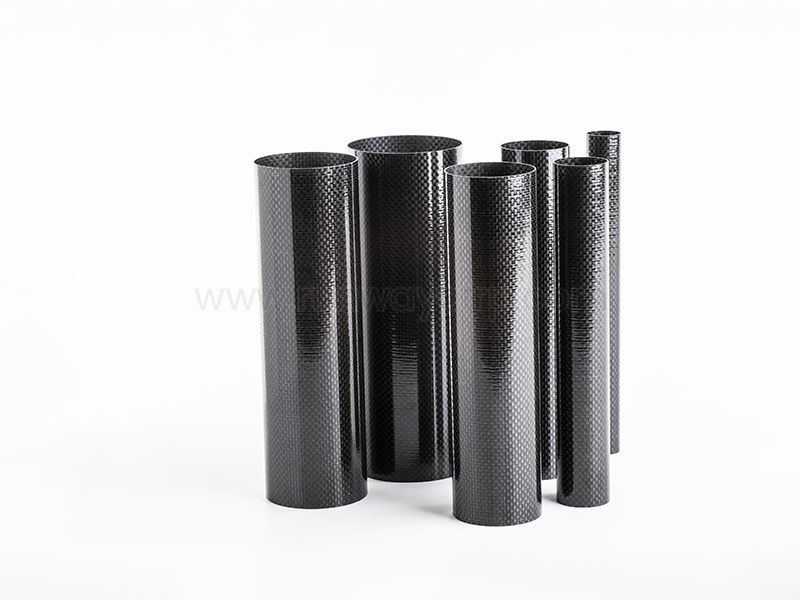
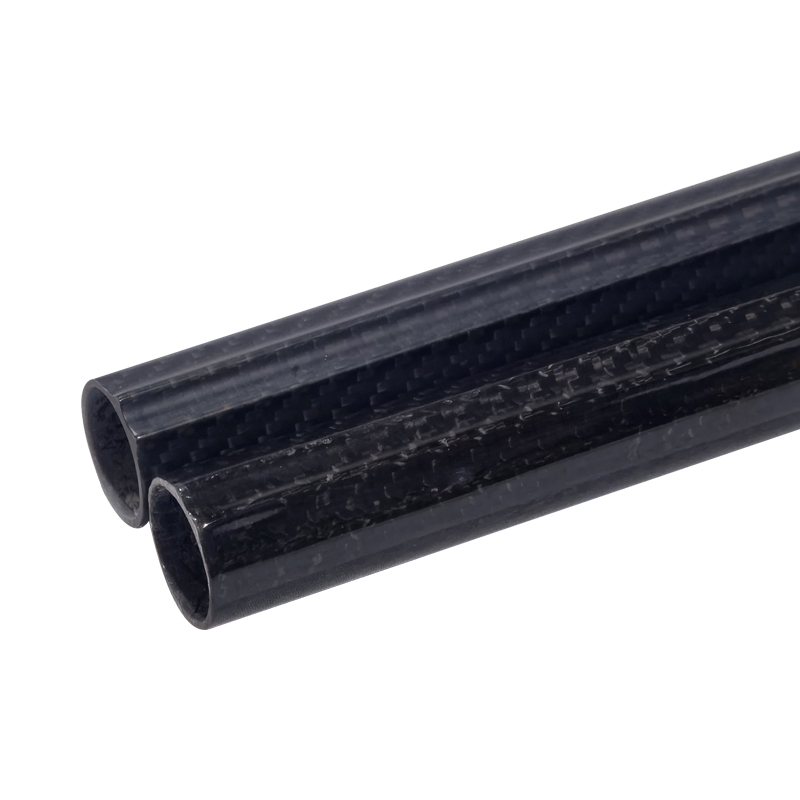
Glossy carbon fiber uses a smooth reflective surface that can increase the apparent depth of the weave. Light travels across the clear layer and creates highlights along the resin-rich areas, making the pattern easier to see from several angles. This effect is especially noticeable on curved parts such as mirror housings, fender vents, motorcycle fairings, and a glossy carbon fiber tube used as a visible support or structural styling element.
Gloss is often selected for sports cars because it coordinates with painted clearcoat, polished metal, glass, and other reflective components. On white, silver, red, or blue vehicles, the dark weave can create a strong contrast line. On black vehicles, gloss carbon fiber may blend with the paint in low light but become more visible under direct illumination.
The disadvantage is that the same reflective surface reveals more than the weave. Fingerprints, water spots, polishing residue, and fine linear scratches can be visible because they interrupt the reflection. A gloss panel may appear clean from one angle and show surface marks from another angle under overhead garage lighting.
Matte carbon fiber has a low-reflection surface that distributes light rather than producing a sharp highlight. This gives the weave a softer appearance and reduces the visual intensity of large panels. The result is often suitable for vehicles with satin paint, brushed metal, Alcantara, textured plastics, or dark interior materials.
Matte finishes are frequently chosen for interior trim because reflections near the windshield can be distracting. A matte dashboard insert can also reduce the appearance of fingerprints compared with a smooth gloss panel. However, reduced fingerprint visibility does not mean the surface is maintenance-free; oils, dust, and cleaning residue can still collect in the texture.
The main repair concern is sheen consistency. If a matte panel is polished, the treated area may become glossier than the surrounding surface. That creates a visible patch even when the scratch itself has been reduced. Professional refinishing may require retexturing or recoating the entire visible section rather than correcting only a small mark.
The phrase “carbon fiber finish” can describe several different products. A real carbon fiber panel contains carbon reinforcement embedded in resin, while a carbon-fiber vinyl film uses a printed or textured surface over an adhesive polymer layer. A carbon overlay may consist of real carbon fabric placed over an existing component, often adding visual texture without replacing the original part.
These products should not be compared only by appearance. A structural carbon fiber component must be evaluated for fiber orientation, resin content, void control, load requirements, dimensional accuracy, and curing conditions. A cosmetic film is evaluated more heavily by adhesive performance, conformability, UV resistance, color stability, and removal behavior.
| Product type | Structural carbon content | Typical purpose | Surface options | Main purchasing risk |
|---|---|---|---|---|
| Molded carbon fiber part | Yes | Replacement or structural component | Gloss, satin, or matte | Incorrect laminate design or fit |
| Carbon fiber overlay | Yes, but usually thin | Cosmetic upgrade over an existing part | Gloss or matte | Edge lifting and thickness mismatch |
| Carbon-fiber vinyl | No | Low-cost visual change | Printed gloss or matte texture | Pattern distortion, bubbles, fading |
| Clear-coated carbon panel | Yes | Visible automotive or industrial part | Usually gloss | UV yellowing or coating defects |
| Matte-coated carbon panel | Yes | Low-glare styling or interior trim | Matte or satin | Uneven sheen after cleaning or repair |
A buyer should request photographs of the actual production surface, not only catalog images. For visible panels, useful acceptance criteria can include a defined gloss range measured at 60 degrees, a maximum allowable weave distortion, edge-trim tolerance, and a documented inspection process. If a supplier cannot describe how visible surfaces are checked, the final appearance may vary from one batch to another.
Glossy carbon fiber is commonly suitable for spoilers, diffusers, mirror caps, side skirts, hood vents, roof panels, and aerodynamic trim. These parts are often viewed from several meters away, where stronger reflections help the weave remain visible. Gloss also pairs with factory clearcoat and can make separate carbon components appear visually connected to the painted body.
Matte carbon fiber can work well for external parts when the design emphasizes low reflection or a factory-plus appearance. It may suit a satin-gray vehicle, a military-inspired build, or a motorcycle with multiple textured surfaces. The buyer should confirm that the matte coating is intended for outdoor exposure and is compatible with UV protection, road contaminants, and repeated washing.
For exposed parts, ask whether the outer coating includes UV stabilizers and whether the supplier specifies a coating thickness. A clearcoat that is too thin may provide limited protection from contamination, while excessive coating can soften weave definition or add unnecessary mass. A practical inspection should check pinholes, fisheyes, edge coverage, resin pooling, coating uniformity, and mounting-hole accuracy.
Matte carbon fiber is often the more practical choice for dashboards, door inserts, center consoles, steering-column covers, and instrument bezels. These locations receive frequent contact and are exposed to sunlight through glass, so glare and fingerprints can affect daily usability. A matte surface also coordinates with textured plastics and soft-touch materials more easily than a highly reflective panel.
Glossy trim remains appropriate for show cars, luxury-style interiors, and cabins designed around piano-black, polished aluminum, or gloss-painted surfaces. It can make small details visually prominent, but it also increases the need for careful handling. A microfiber cloth should be used instead of paper towels, and cleaners containing abrasive particles should be excluded.
Before ordering, compare the finish beside the actual dashboard and seat materials. A gloss panel beside satin plastic can look inconsistent, while a matte panel beside polished metal may appear too subdued. Interior lighting should also be checked at night, because overhead LEDs can produce strong reflections on gloss surfaces.
Motorcycle applications require attention to viewing distance, curvature, vibration, and exposure to fuel or cleaning chemicals. Glossy carbon fiber can emphasize the shape of a fairing, tank cover, front fender, or exhaust shield because curved surfaces create moving highlights. Matte carbon fiber can provide a less decorative appearance and may reduce glare during riding.
Neither finish should be selected solely because it is assumed to hide all damage. Matte can make light swirl marks less reflective, but a shiny rub mark on a matte panel may become more visible because it changes the surface texture. Gloss can reveal scratches quickly, but minor surface marks may sometimes be reduced through controlled polishing if the damage is limited to the clearcoat.
Mounting accuracy is particularly important for motorcycle parts. Check fastener alignment, edge clearance, hole diameter, panel thickness, and contact with adjacent components. A finish decision cannot compensate for a panel that vibrates, rubs against painted surfaces, or traps dirt at the edges.
A complete vehicle build should use a consistent finish strategy rather than selecting gloss or matte for each part independently. One possible plan is gloss for exterior aerodynamic parts, matte for dashboard trim, and satin for smaller transition pieces. Another plan is full matte for a low-reflection design, provided the paint, wheels, glass, badges, and lighting details support that direction.
Paint color is a major factor. Gloss carbon fiber creates strong contrast against lighter paint, while matte carbon fiber can provide a controlled transition on gray, black, or satin-painted vehicles. On bright metallic paint, the weave may dominate the design; on dark solid paint, the finish difference may be the main visual feature.
Lighting should be evaluated at three locations: outdoor sunlight, workshop LEDs, and low-light conditions. Gloss changes dramatically with viewing angle, while matte remains more consistent. A sample panel viewed under all three conditions can prevent a costly mismatch across a complete build.
Glossy carbon fiber maintenance and scratches are closely connected because the reflective surface makes contamination and defects easy to see. Routine cleaning should begin with loose-rinse removal, followed by a pH-neutral automotive shampoo, clean water, and a soft microfiber drying towel. Circular rubbing should be minimized because repeated friction can create fine marks in the clear layer.
Avoid household glass cleaner, abrasive compounds, stiff brushes, and untested solvent-based products. These may reduce gloss, stain the coating, or leave uneven residues. If the part is ceramic-coated or waxed, use a product specifically approved for coated composite surfaces and follow the stated curing time.
A scratch should first be classified by depth. If it is visible only at a particular angle and cannot be felt with a light fingernail pass, it may be limited to the clearcoat. If the scratch exposes weave, resin, or substrate, polishing alone is not an appropriate repair method and may remove additional protective material.
Matte carbon fiber durability and cleaning depend heavily on the texture and coating system. The surface should be wiped with a clean, damp microfiber cloth rather than a dry cloth that drags dust across the panel. A diluted pH-neutral cleaner can be used when water alone does not remove oils, but the product should be tested on an inconspicuous area first.
Matte surfaces should not receive ordinary gloss-enhancing polish. Polishing can alter the microtexture and create a shiny spot that is more noticeable than the original mark. When a matte panel is damaged through the coating, refinishing the complete visible section may provide a more uniform result than attempting a small isolated repair.
Matte carbon fiber can hide some fine reflections, but it does not prevent scratches. Abrasion, contact with keys, grit trapped under trim, and aggressive washing can still change the texture. Buyers should ask whether the supplier offers replacement panels, refinishing support, or a documented coating specification before committing to a large interior or exterior installation.
The following matrix provides an objective starting point for selecting between the two finishes. It ranks practical suitability on a five-point scale, where 5 indicates the stronger fit for that criterion rather than superior overall performance.
| Priority | Glossy carbon fiber | Matte carbon fiber | Preferred finish |
|---|---|---|---|
| Maximum weave visibility | 5/5 | 3/5 | Glossy |
| Low glare near windshield | 2/5 | 5/5 | Matte |
| Fingerprint resistance | 2/5 | 4/5 | Matte |
| Dust concealment | 2/5 | 3/5 | Slight matte advantage |
| Show-car visual impact | 5/5 | 4/5 | Glossy |
| Easy localized polishing | 4/5 | 2/5 | Glossy |
| Uniform repair appearance | 4/5 | 2/5 | Glossy |
| Technical, understated styling | 3/5 | 5/5 | Matte |
| Compatibility with satin paint | 3/5 | 5/5 | Matte |
| Compatibility with factory clearcoat | 5/5 | 3/5 | Glossy |
This table does not measure structural strength because surface sheen does not determine laminate design. A matte replacement panel can be stronger or weaker than a glossy panel depending on the number of plies, fiber direction, resin content, curing cycle, and manufacturing controls. Buyers should keep finish selection separate from structural qualification.
Runway is a composite manufacturer associated with Zibo Runway Composite Co., Ltd. in Zibo, Shandong, China. Its product range includes carbon fiber tubes, plates, rods, angles, shapes, telescopic poles, connectors, pultruded products, and filament-wound components. The company describes manufacturing methods including filament winding, roll wrapping, and pultrusion, with production support for carbon, glass, aramid, and hybrid reinforcements.
For a buyer comparing visible carbon components, this type of manufacturing scope matters because different geometries require different processes. Pultrusion is commonly suited to continuous constant-section profiles, filament winding is useful for tubular forms, and roll wrapping can support laminate construction around mandrels or shaped tools. The supplier should still confirm the exact process, laminate schedule, outer coating, dimensional tolerance, and inspection method for the requested part.
A professional request for quotation should include the following information:
Carbon fiber type and weave, such as 3K 2×2 twill or plain weave.
Target outer dimensions and tolerance, for example ±0.10 mm or another agreed value.
Finish requirement, such as gloss, satin, or matte.
Gloss measurement target, preferably recorded with a 60-degree glossmeter.
Clearcoat or surface-resin specification, including UV exposure requirements.
Fiber orientation and ply schedule for load-bearing components.
Inspection points for pinholes, voids, resin pooling, weave distortion, and edge quality.
Packaging requirements for preventing dents, abrasion, and coating contact during shipment.
For a glossy carbon fiber tube, the cosmetic inspection should cover circumference, seam visibility, weave alignment, end-face finish, and coating consistency. For matte tubes or panels, the inspection should also cover sheen variation between sections. A sample approval process can reduce delivery risk by establishing a reference part before the production batch begins.
The price difference between glossy and matte carbon fiber is not fixed. A basic cosmetic vinyl piece may cost a fraction of a molded carbon replacement panel, while a custom autoclave-cured component with complex tooling can cost several hundred or several thousand dollars. In many small parts, the finish itself may account for less than 10% of the total price, with tooling, trimming, fitting, packaging, and shipping accounting for more.
Matte finishes can increase total cost when the coating requires specialized texture control or when repairs demand complete-section refinishing. Gloss finishes may cost more when additional clearcoat layers, sanding, polishing, or UV protection are specified. The correct comparison should therefore use delivered cost rather than surface-finish price alone.
| Cost category | Glossy finish risk | Matte finish risk |
|---|---|---|
| Initial part price | Extra clearcoat and polishing | Specialized matte coating |
| Installation | Surface protection during fitting | Avoiding localized sheen damage |
| Cleaning | More frequent appearance correction | Texture-sensitive cleaning |
| Repair | Usually better for clearcoat polishing | May require complete-section refinishing |
| Replacement | Visible scratches can trigger early replacement | Uneven sheen can trigger early replacement |
| Downtime | Rework after coating defects | Rework after texture inconsistency |
A simple ownership estimate can compare purchase, maintenance, repair, and replacement. For example, a $600 gloss panel cleaned monthly with a $12 microfiber and cleaner allowance may have a lower five-year upkeep cost than a $500 matte panel that requires a $250 refinishing job after a localized scratch. The actual result depends on use, but this model shows why the cheapest initial finish may not produce the lowest total cost.
Delivery risk should also be included. Confirm production lead time, sample approval time, packaging method, shipping terms, replacement policy, and the process for handling coating defects. A written dimensional drawing and approved finish sample can reduce the chance of receiving a part that fits mechanically but does not match the rest of the vehicle.
| If your priority is... | Choose... | Because... |
|---|---|---|
| Strong weave visibility and reflective depth | Glossy carbon fiber | The clear surface creates more contrast and highlights |
| Reduced windshield or instrument-panel glare | Matte carbon fiber | The textured surface scatters light |
| Show-car exterior styling | Glossy carbon fiber | It coordinates with painted clearcoat and polished trim |
| Low-key daily-driver appearance | Matte carbon fiber | It produces fewer sharp reflections |
| Interior trim with frequent contact | Matte carbon fiber | Fingerprints are generally less prominent |
| Clearcoat scratch correction | Glossy carbon fiber | Controlled polishing is more feasible |
| Satin paint and textured cabin materials | Matte carbon fiber | The surfaces share a lower-reflection appearance |
| Custom structural tubing | Either finish | Laminate design matters more than surface sheen |
| Lowest initial visual-upgrade cost | Vinyl or overlay | These products generally require less structural modification |
| Long-term structural replacement | Molded carbon component | The part can be designed for the required load and fit |
The answer to What looks better, glossy carbon fiber or matte carbon fiber? depends on the design goal rather than a universal ranking. Glossy carbon fiber is usually the stronger visual choice for exterior styling, visible weave, show vehicles, and parts intended to coordinate with clear-coated paint. Matte carbon fiber is usually the more practical choice for interior trim, low-glare locations, satin-painted vehicles, and understated automotive builds.
Before purchasing, compare a physical sample under sunlight, workshop LEDs, and the vehicle’s interior lighting. Confirm whether the product is real carbon fiber, an overlay, vinyl, or a cosmetic coating, then review the fiber specification, finish measurement, dimensional tolerance, and repair method. For structural products such as a glossy carbon fiber tube, prioritize laminate design, manufacturing process, and inspection documentation before choosing surface appearance.
A buyer who wants maximum visual contrast should select gloss and plan for careful cleaning and scratch inspection. A buyer who wants reduced reflection and a quieter visual style should select matte while accepting that localized refinishing can be more difficult. The most reliable choice is the finish that matches the complete vehicle design, the part’s exposure conditions, and the expected five-year ownership cost.
+86 156 9543 6852
Science & Technology Industrial Park, Zhangdian, Zibo, Shangdong, China